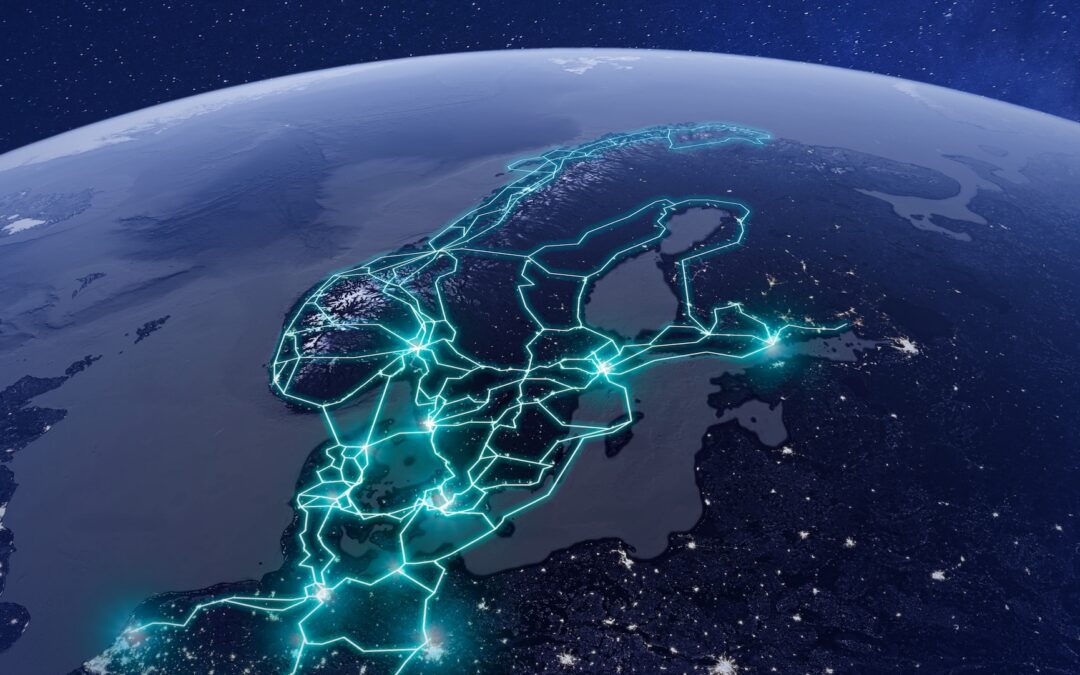
GlobalConnect has begun construction of a new subsea cable across the Kattegat, connecting Sweden and Denmark. This route is part of a broader effort to build a resilient Nordic digital fiber network and plays a critical role in securing Nordic connectivity to continental Europe.
“Several sea cables already connect Sweden and Denmark, but most are over 20 years old and close to run out of capacity,” says Pär Jansson, SVP, GlobalConnect Carrier.
“As data traffic between the Nordics and continental Europe continues to grow, more cables are needed to create redundancy, strengthen security and support the region’s long-term growth.”
The 92km long sea cable between Lerkil and Saeby has the capacity to transport all data currently being produced in the Nordics. It will connect to land-based digital highways in Denmark and Sweden before continuing to Finland and continental Europe, creating a 2600 km long digital corridor from Helsinki to Hamburg. The new route adds an independent path for data traffic, reducing the risk of disruptions and keeping connectivity stable if other routes are affected.
Part of a broader Nordic expansion
The Kattegat cable between Lerkil and Saeby represents an investment of €11.9 million, of which €5.9 million is supported by the EU’s Connecting Europe Facility (CEF2). It is part of GlobalConnect’s “Bifrost” program, a multi-year initiative to expand and modernize GlobalConnect’s Nordic fiber network with over 3,000 km new digital highways planned in the coming years. This project is the third major subsea initiative launched by GlobalConnect, alongside new highway routes between Sweden–Finland and Gotland–Estonia.
New subsea cables (totaling approximately 442 kilometers) are currently being constructed between: Sweden – Denmark, Sweden – Finland, Sweden – Estonia – Finland.
Sweden – Denmark Project by the numbers
- New subsea cable: ~92 km
- Total Capacity: 288 fiber strands
- Network route:
Lerkil (South of Gothenburg) > Saeby (Northern Denmark) - Fiber cable: The cable has the capacity to transport all data currently being produced in the Nordics.
- Permit process – land and marine surveys
Project timeline
2025
- Permit process – land and marine surveys
2026
- Marine surveys
- Land-based construction starts
- Repeater site construction
- Sea cable laying
2027
- Sea cable laying continuation
- Go-live
Building Infrastructure at Sea – Step by Step
- Permit Process
Working with local authorities to secure environmental and construction permits. - Marine Surveys
In 2026, GlobalConnect will be conducting several marine seabed surveys in the area to:
- Identify the optimal cable route
- Avoid disturbing the seabed
- Detect physical obstacles like rocks, underwater currents, or archaeological findings
- Land-Based Construction
On land, the existing land infrastructure will be upgraded, ie installing new high-capacity fiber cables in existing ducts with higher capacity and connected to the sea cable. - Beach Drilling
Drill landing points on beaches to allow the sea cable to connect with land-based infrastructure. (2026) - Repeater Site Construction
Two new ILA (Inline Amplifier) stations will be built to connect to and amplify the signal coming from the sea cable. (2026) - Sea cable laying
A cable laying ship is deployed, placing about 500 meters of cable per hour along the prepared 92 km route on the sea floor. (2026) - Go-Live
The new subsea cable is scheduled to go live by the end of 2027, offering additional redundancy, and faster, more reliable data traffic across the region.